AI and Chip Stocks Face Downturn Amidst Weekend Warnings on Sector Growth
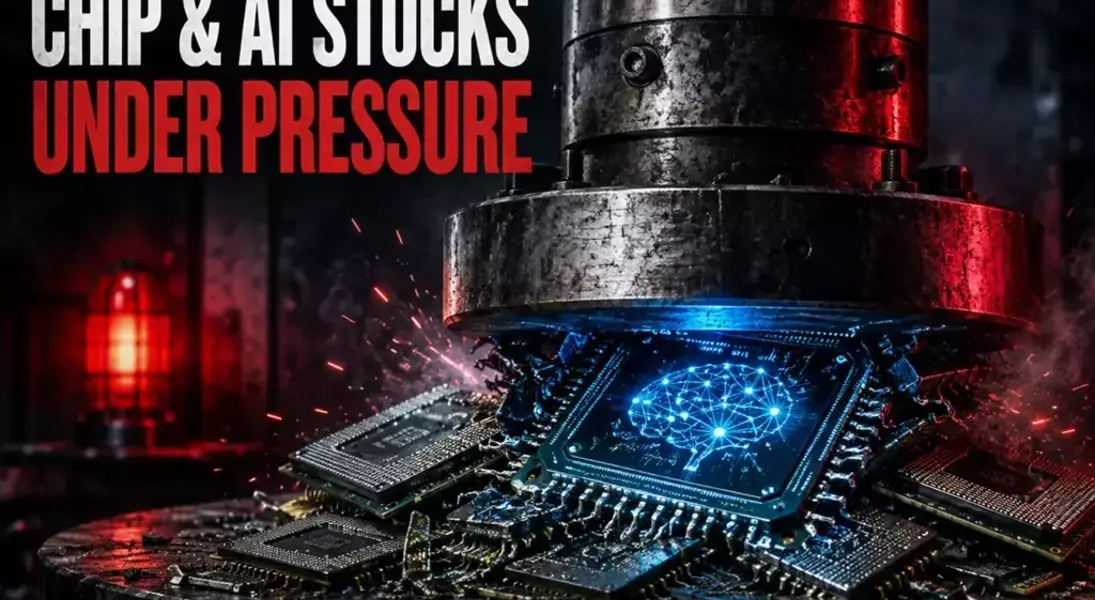
Leading artificial intelligence and semiconductor company shares witnessed a notable drop on Monday, outpacing the broader Nasdaq's more moderate declines. This market shift appears to be a direct consequence of weekend statements from key figures in the AI industry, who highlighted potential hazards associated with the swift evolution of advanced AI models. These concerns are prompting investors to reconsider the long-term growth projections for the sector, particularly for companies deeply integrated into the AI infrastructure ecosystem.
On the trading day, several prominent companies in the AI, semiconductor, and data center segments recorded substantial losses. For instance, Coherent saw an 11.70% decrease, Astera Labs dropped by 10.78%, and Lumentum fell by 9.88%. Other significant declines included Arm Holdings (-9.01%), Lam Research (-7.72%), SK Hynix (-7.67%), Credo Technology (-7.48%), and ASML (-7.10%). Marvell Technology, Monolithic Power Systems, CoreWeave, Applied Materials, KLA Corp., Nebius, and Micron also experienced drops ranging from 4.94% to 6.74%.
The catalyst for this market reaction was a series of warnings issued by leaders from Anthropic, OpenAI, and xAI. Their concerns spanned various critical areas, including potential cybersecurity vulnerabilities, biological threats, and widespread economic disruption. A central point of apprehension was the industry's ability to control the rapid pace of AI development, suggesting that progress might be outstripping safety measures. These statements imply a potential future with a more regulated pace of AI advancement, increased governmental oversight, and greater investment in safety and governance protocols. Although former President Trump expressed opposition to slowing AI development, citing potential benefits for competitors like China, these warnings were sufficient to cast doubt on the market's previous assumptions of uninterrupted AI growth.
The most severely impacted companies are generally those positioned closest to the foundational infrastructure supporting AI, including providers of memory, networking components, optical equipment, semiconductor manufacturing tools, chip designs, and data center computing capacity. The high valuations of these companies are typically predicated on several core beliefs: the continuous development of more powerful AI models, consistent aggressive capital expenditure by hyperscalers, sustained strong demand for related hardware, and an environment free from significant governmental delays or restrictions on AI development. While there has been no immediate confirmation of reduced capital expenditure plans, the weekend's warnings have introduced a new layer of risk to valuations that had already factored in years of robust growth.
For market participants, the crucial question now is whether this represents a temporary market correction driven by shifts in sentiment or the beginning of a broader reassessment of future AI spending. The performance of major tech companies like Microsoft, Meta, and Alphabet, which saw gains, suggests that investors are not abandoning technology in general. Instead, the market appears to be selectively reducing exposure to stocks most dependent on the sustained boom in AI infrastructure. Nvidia, a bellwether in the AI sector, experienced a more modest decline of 2.85%, trading near its 100-day moving average, indicating a differentiated response compared to the more severely affected infrastructure providers. The overall market indices, including the Dow Industrial average, S&P index, and Nasdaq index, all closed lower, highlighting a cautious stance among investors following the weekend's developments.