Canada's July Employment Report: A Comprehensive Overview of Labor Market Trends
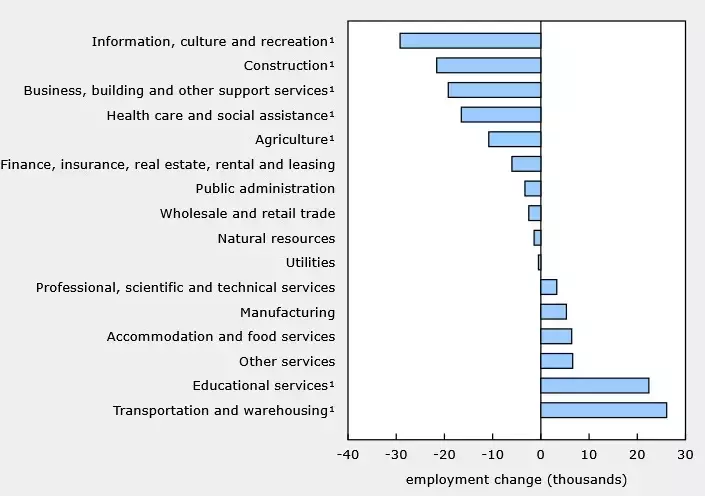
Canada's recent employment statistics for July paint a concerning picture of the nation's labor landscape. The latest report indicated a substantial decline in job numbers, significantly missing expert projections. This downturn has raised questions about the underlying health of the Canadian economy and its potential implications for monetary policy. The Canadian dollar has reacted to this data, reflecting market anticipation of potential adjustments from the central bank. Despite a slight improvement in the unemployment rate, a deeper dive into the figures reveals a less optimistic scenario, particularly concerning the composition of job losses and overall labor force dynamics.
The current state of the Canadian job market suggests a period of stagnation following earlier gains. Key metrics, beyond the headline unemployment rate, point to persistent challenges that could influence future economic growth. This detailed analysis will explore the various components of the July employment report, examining their broader impact on Canada's economic trajectory and the strategic considerations for policymakers. Understanding these trends is crucial for assessing the Canadian economy's resilience and its sensitivity to evolving global and domestic pressures.
Understanding July's Employment Contraction
The Canadian labor market experienced a notable setback in July, with a net loss of 40,800 jobs, starkly contrasting with the anticipated increase of 13,500. This unexpected contraction points to a significant cooling in employment generation, primarily driven by a substantial reduction in full-time positions. Despite the overall job losses, the unemployment rate registered a marginal improvement, dipping to 6.9% from the previous 7.0%, although this was slightly below the 7.0% consensus forecast. This seemingly contradictory trend can be attributed to shifts within the labor force, where a decrease in the number of individuals actively seeking employment can artificially lower the unemployment rate even amidst job losses.
A more granular examination of the data reveals that the decline in employment was largely concentrated in the full-time sector, which saw a reduction of 51,000 jobs. This full-time decline was somewhat offset by a modest gain of 10,300 part-time positions. The participation rate, a key indicator of labor force engagement, also saw a slight decrease from 65.4% to 65.2%, suggesting that fewer people are either working or actively looking for work. Furthermore, the report highlighted a broader trend of minimal net employment growth since the start of the year, with July's employment levels showing little change compared to January. This lack of sustained growth, coupled with the significant full-time job losses, paints a picture of a labor market struggling to generate momentum, despite some pockets of resilience.
Implications for Monetary Policy and Economic Outlook
The latest employment figures have significant ramifications for the Bank of Canada's monetary policy decisions and the overall economic outlook. The weaker-than-expected job report immediately triggered an increase in market expectations for an interest rate cut by the Bank of Canada. Prior to the data release, the probability of a rate cut at the September meeting stood at 33%, which subsequently rose to 38%. This shift reflects traders' belief that a struggling labor market might compel the central bank to ease monetary conditions to stimulate economic activity and support employment.
However, the path forward for the Bank of Canada remains complex. While the employment data suggests a need for stimulus, the central bank also has to contend with underlying inflation pressures. Despite the soft jobs report, average hourly wages saw an increase of 3.3%, slightly above the prior 3.2%. This persistent wage growth, alongside other inflationary factors, means the Bank of Canada would likely require more compelling evidence of sustained economic weakness to justify a rate cut, particularly given its mandate to maintain price stability. The depreciation of the Canadian dollar across various currency pairs following the report underscores the market's immediate reaction to the perceived increase in the likelihood of rate adjustments. The central bank faces a delicate balancing act: addressing a faltering labor market without exacerbating inflationary risks, a challenge that will shape its upcoming policy decisions.