China's September PMIs: Economic Pulse Before the Holiday
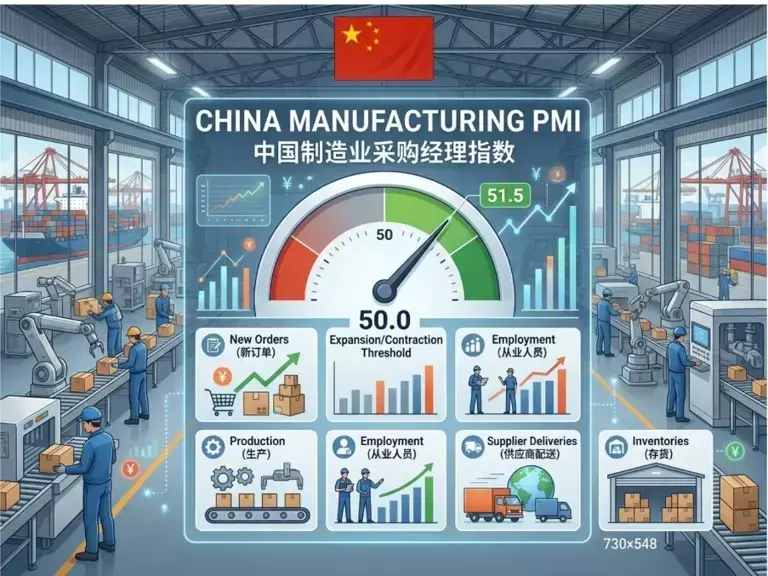
Ahead of a significant national holiday, China is poised to unveil crucial economic indicators today, offering a snapshot of its industrial and service sectors. The release of both official and private Purchasing Managers' Index (PMI) data for September is keenly awaited by global markets, particularly those with strong ties to the Chinese economy. Forecasts suggest a modest rebound in manufacturing, potentially signaling a shift towards expansion, while the outlook for non-manufacturing and services remains varied. The timing of this release, directly preceding a week-long break, is expected to amplify its impact on international trade, especially for currencies like the Australian dollar and commodities such as oil.
Today's economic data release from China encompasses both the official National Bureau of Statistics (NBS) and the private Caixin (RatingDog) PMIs for September. This consolidated release is a direct consequence of the impending week-long holiday, which commences on Thursday, October 1st. The NBS figures, including manufacturing and non-manufacturing PMIs, are scheduled for 01:30 GMT (21:30 US Eastern on September 29th), with the Caixin readings following shortly after at 01:45 GMT (21:45 US Eastern).
Expectations for the NBS manufacturing PMI hover around 50.1, a slight increase from the previous month's 49.8. Should this forecast materialize, it would push the index above the critical 50-point threshold, signifying an expansion in the manufacturing sector. Conversely, the NBS non-manufacturing PMI is projected to reach 49.3, up from 49.0, yet it is still anticipated to remain below 50, indicating continued contraction, albeit at a slower pace.
In contrast, the Caixin surveys are anticipated to present a more stable but somewhat divergent picture. The manufacturing PMI from Caixin is predicted to register 51.6, a marginal rise from 51.5, firmly keeping it within expansion territory. However, the services PMI is expected to experience a minor dip to 51.1 from 51.4, suggesting a slight moderation in growth, though still maintaining an expansionary stance. This disparity between the official and private surveys, which was also evident in the previous month's data, where official readings lagged behind Caixin's more optimistic figures, will be a key area of focus for analysts and traders.
The strategic timing of these releases, occurring just before the extensive holiday period, imbues them with particular significance. With Chinese market participants temporarily stepping away, any unexpected outcomes from these economic reports could lead to heightened volatility in offshore trading. Market-sensitive assets, including the Chinese yuan, the Australian dollar, and various industrial commodities, especially oil, are expected to react acutely to the data. A confirmed return of the manufacturing index above 50 would offer a welcome sign of economic stabilization, while any disappointment in the official figures could reinforce existing concerns about the broader economic landscape.